Sending a State UAS Team After a Hurricane: How Mutual Aid Deployments Work
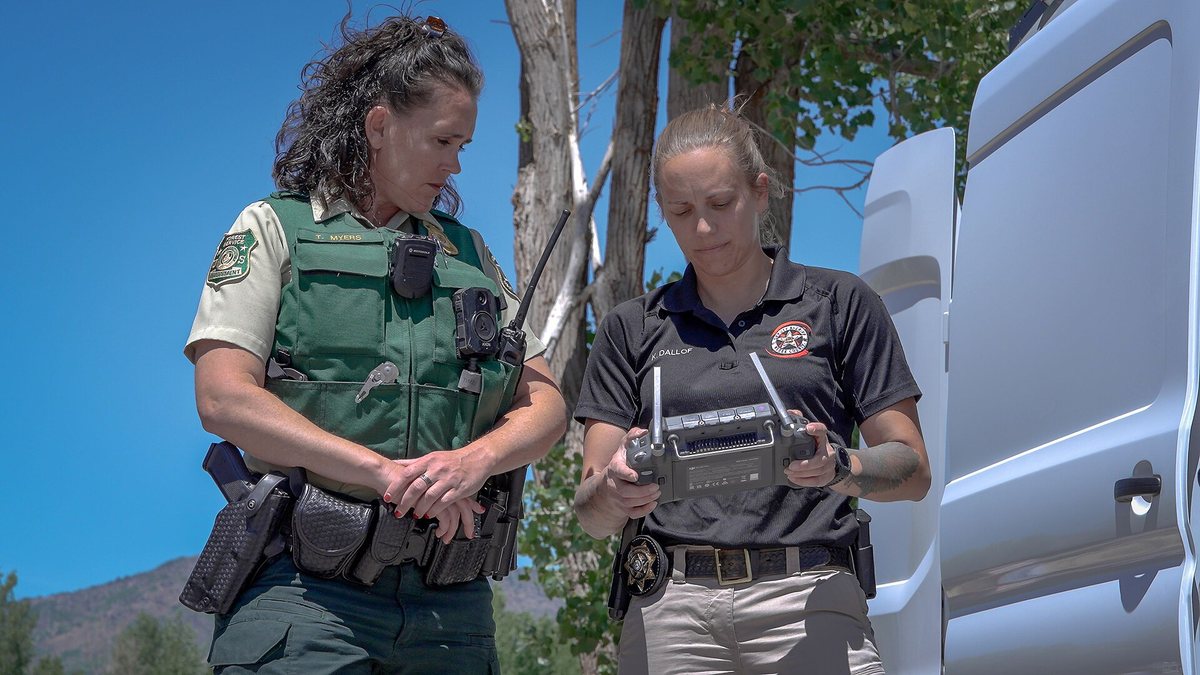
After a major hurricane, some of the drone crews working the damage do not belong to the affected jurisdiction. They are sent by other states under mutual aid, which is how a small territory gets access to trained operators and equipment it could never keep on staff. New York officials have sent teams to hurricane-hit Puerto Rico in exactly this way. The flights look ordinary; the arrangements behind them are not.
Mutual aid is a legal instrument, not a favour
Interstate assistance in a declared emergency runs through standing compacts. They matter because they answer the questions that stop a deployment cold: who pays, whose insurance covers the crew, whether an out-of-state operator's credentials are recognised, and who is liable if something goes wrong. Requests are specific, which is why a receiving emergency management agency asks for capabilities and days rather than for help.
The requesting side has to know what to ask for. A team that arrives with mapping aircraft when the need is night-time search, or with a camera package but no way to deliver files to an agency with no internet, has been deployed inefficiently through nobody's fault.
Self-sufficiency is the entry requirement
A deployed team lands in a place with damaged roads, intermittent power and a fuel queue. Fleets that deploy well arrive able to feed, house, power and move themselves for the length of the assignment, with spare airframes, spare propellers, a generator and charging that does not depend on the grid. Anything a team needs locally is taken from residents, and everyone in the field knows it.
Airspace after the storm
Disaster airspace is crowded and restricted at once. Temporary flight restrictions go up around the response, manned helicopters are working low doing the jobs only helicopters can do, and utility and news aircraft are competing for the same air. Drone crews fly inside that structure with an approval, a radio and a schedule, and the ones who cause problems are the ones who treat a restriction as a formality. Coordination is a full-time role on any deployment of size, which is why teams bring an airspace coordinator rather than an extra pilot.
What the imagery is for
The product is not footage of destruction. It is a set of deliverables somebody downstream has asked for: orthomosaics of neighbourhoods for damage assessment, structure-by-structure imagery for inspectors, road and bridge condition for routing, transmission line and substation status for the utilities, and repeat flights that show whether debris removal is progressing. Each has a customer and a format, and a flight without a named customer is a flight that produces a hard drive nobody opens.
Delivery is the constraint. On a damaged island, moving imagery means moving physical media or waiting for a satellite link, so crews plan for file sizes and hand-offs the way they plan for batteries.
The lesson that keeps repeating
Teams that are useful in a disaster trained together before it. They had credentials that were already recognised, kit lists that fit in a vehicle, data formats the receiving agency could open, and a habit of flying inside restricted airspace under supervision. Mutual aid moves people and aircraft quickly; it does not create competence on arrival, and the after-action reports from every large storm say so in almost the same words.