Finding Methane From the Air: Sensor Types, Detection Limits and What Regulators Accept
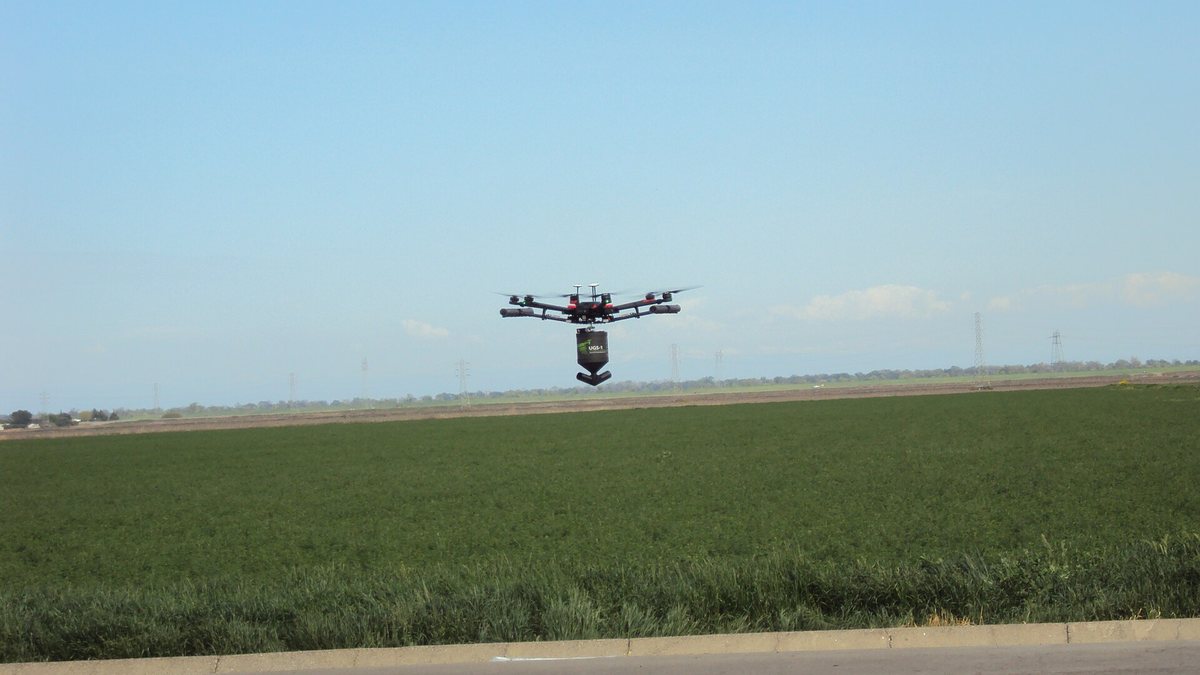
Drone methane detection sensor technology is essential for energy operators seeking compliance with regulatory emissions standards. But the market includes many sensor types aiming at different regulatory requirements. An energy operator deciding which detection method to contract must match the sensor to the regulator’s numeric threshold and visit a compliant method.
What regulators actually accept
Regulators have specific, measurable emissions standards for methane monitoring. The U.S. Environmental Protection Agency (EPA) Alternative Test Letter ALT-150, issued on 15 December 2022, approves a drone-based version of Method 21 for surface emission monitoring at landfills. It specifies a quarterly test requirement that demonstrates compliance with a 500 parts per million (ppm) above background level.[REF]1[/REF]
Washington State has an emissions standard for methane detection payloads of 500 ppm, with monitoring requirements in its Administrative Code 173-408-990.[REF]3[/REF]
Compliance regimes also have asset-specific requirements, as seen in EPA Alternative Test Method (MATM-14) for the Percepto Air Max Unmanned Aerial System (UAS). EPA approval is limited to MATM-14's scopes - fugitive emissions components and inspection and monitoring of covers and closed vent systems. EPA approval does NOT convey general acceptance for methane compliance.[REF]4[/REF]
Detection limits are not interchangeable
Different sensor and regulatory maturity exist for methane detection. Sensor limits, though, are not interchangeable. As per the studies published this year, a "detection limit" can mean different things to different detector designs.[REF]5,7,8,9,10,11,12,[/REF]
(chart) Drone-based methane detection limits by sensor type (verified numbers confirmed)
A drone-based sensor may report high sensitivity in grams or kilograms per hour - but often to a specific type of source and under specific wind and flight conditions. A 2024 preprint reported a lower measurement bound of about 0.007 kg/h, while a UBC report found a detection limit of 1–50,000 ppm⋅m.[REF]5,8,11,14[/REF]
Even when the same instrument can report methane in different metrics, the metrics are not always interchangeable. A British Columbia test of the Guardian protocol found a detection distance of 0.5 m to 30 m and a detection limit range of 1–50,000 ppm⋅m, but it's unclear how those figures relate to g/hr or kg/hr in the field.[REF]12[/REF]
These are not just different units of the same detection limit. Given the differences in sensor design, source type, and wind conditions, methane regulators need to embrace a unit-level view about just how low is "low enough" - or rather, what low enough means in their context.
What the field studies say about performance
When considering methane detection sensors, operators need to know what they can be expected to actually detect - and regulatory acceptance of their results relies on it.[REF]7,8,9,10,11,12,13,14,15[/REF]
MethaneAIR, for instance, published a 2026 study on relative methane detection performance. The instruments carefully controlled the methane source and the flight conditions to report their best case - a 90% probability of detection at 6 kg/h. The same instruments demonstrated a high probability of detection of 0.7 kg/h.[REF]7,8[/REF]
Field-verified detection metrics under real-world conditions must be the benchmark.
In one case, a drone supplier made an elegant point about why detection metrics had moved from methane to CO2. Comparison - how much is actually vented?
"We cope with methane because essentially everything about methane makes it hard to detect,"
"You need to detect it quickly and reliably. Compare that to CO2 sensors. That's just a different problem. The CO2 is in the air with you - you just need to get the change in CO2 to locate the source. Dealing with methane is like, What's there that shouldn't be upsets everything."[REF]7,11,13,15[/REF]
It underscores the issue in cross-market comparisons. Tech literally treats methane differently from gases that make up, and interact with, the air humans breathe.
Wind and flight envelopes
For drone methane detection, the flight and the carrier platform make areal difference in the sensor's effectiveness.
A critical shared requirement are wind speed minimums and maximums, as wind can quickly clear a methane cloud and make it indistinguishable. The UBC report stated a drone sensor was suitable for wind speeds under 5 m/s, with height trade-offs affecting plume detection.
This matters - a 2024 paper on a Hoensthuren prototype found that methane emissions of 43 g/h could be detected at distances of over 10 m and wind speeds of at least 3 m/s. The same paper specified a minimum wind speed of 4 m/s for reliable sensor positioning.
The lowest wind speed on the day is similarly important. On a totally still day, atmospheric conditions may obscure a methane roil as much as the roil that clears it. A 2026 study reported drone teams exhibited a 90% probability of detection below 6 kg h−1 under controlled conditions.
For most operators, where the methane is most likely to diffuse into uncharacterizable air pollution is where it crosses a right of way, and where sensitive human or civil structures are most exposed to risk. As the Earth continues to warm, the possibility of thunderstorms - or at least big gusts of wind - clearing methane plumes - becomes more prevalent.
How to choose the sensor for the compliance job
After all that, no perfect sensor will solve all methane monitoring challenges. But deploying the right one for your regulator's requirements will keep you safe.
Baseline intakes: Is your regulator using ppm, g/hr, or some other metric for methane emission thresholds in your area?
Target threshold: With the baseline intake as your map, confirm the regulatory limit AND the percentage of emissions your operator is expected to reliably detect. A suit for a 10% margin of error is not the same as a threshold with a 5% margin.
Wind requirements: Most drones with methane emissions detectors have rigid upper and lower wind speeds for when the carrier can fly. Get the wind-speed statistics for the site(s) and the operational calendar, and filter your options to the right delivery platforms.
Flight conditions: Some sensors, especially some popular aircraft-mounted curves, require specific pitch-and-roll limits. Confirm your fleet can operate in the sensor envelope or get the capital to upgrade (right platforms and trained pilots also provide growth opportunities, though - perhaps this upfront investment secures your spot).
verify that your sensor complies with the regulatory requirements of your geographic area. The analyzer should confirm that your sensor complies with the regulatory requirements of your geographic area. Your prognosis analysis must comply with the regulatory requirements of your geographic area.